
Student Voice Without Chaos: How SOLIS Builds Agency, Joy, and Real Learning
☀️If you’ve ever watched a child light up when they’re taken seriously, you already know the secret: when kids have a voice, they don’t become “bossy”… they become invested.
Student voice is the steering wheel, not the backseat driver
🚙Think of education like driving through the mountains. You need a clear road, guardrails, and a destination. But if the child never gets to touch the steering wheel—even a little—they stop paying attention to the journey.
In SOLIS culture, the student’s voice doesn’t mean “do whatever you want.” It means partnership: we guide children to keep curiosity and joy alive while they build both academic strength and emotional-social skills. And they are very conscious of this process.
Here’s what you’ll learn in this article: what student voice looks like day-to-day, how it stays structured, and why research keeps pointing to the same thing—agency fuels learning.
1) Partnership Over Power Struggles: Turning “You must” into “Let’s build this”
Did you ever notice how the fastest way to kill curiosity is to turn learning into a tug-of-war?
🤝What you will see in SOLIS is that we partner with the child. We talk with students—extensively—about why academics matter and which emotional-social skills they want and need to develop. The goal isn’t to enforce education. It’s to guide them to maintain curiosity and joy while growing real competence.
That’s not just a “nice philosophy.” A large meta-analysis (213,612 students) found that perceived autonomy support is associated with a range of positive learning outcomes, including motivation, engagement, self-regulated learning, and academic performance. (source: sciencedirect.com)
Daniel H. Pink put it simply: “Human beings have an innate inner drive to be autonomous…”
🧭Practical tip: Replace “Because I said so” with one partnership question:
“What’s your plan to meet this goal—and what support do you need from us?”
2) The School Circle Effect: Where problems get solved with students, not to them
Here’s the reality: conflicts and messy moments aren’t bugs in a school—they’re where the learning hides.
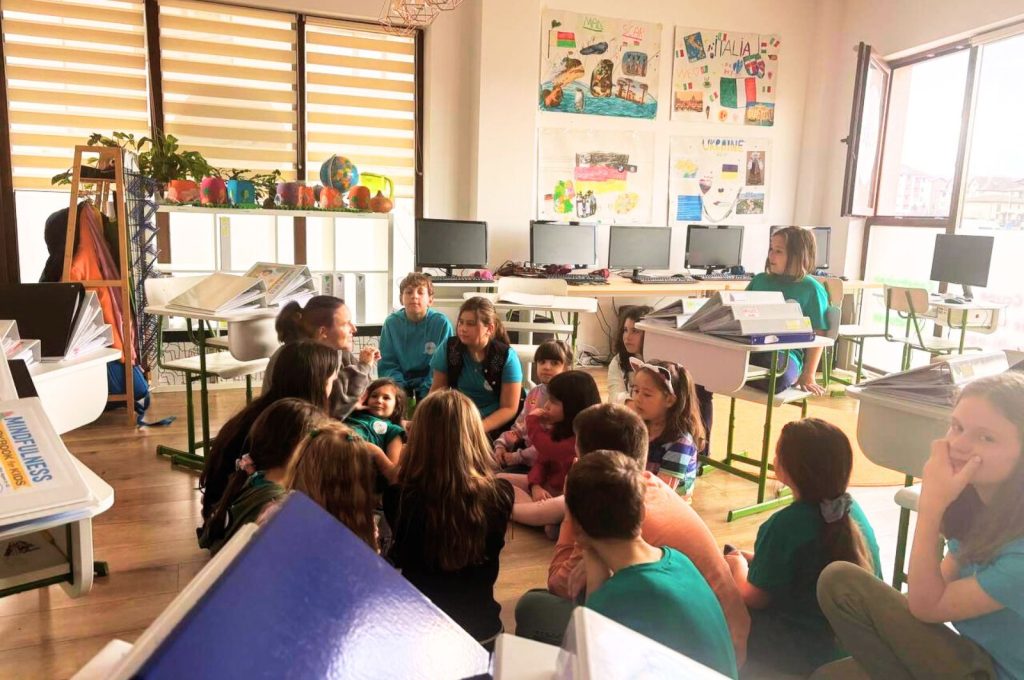
💛That’s why you run school circles: to make decisions that impact the class or whole school, and to solve problems or conflicts through a shared process. Circles aren’t a free-for-all; they’re a structure where students practice listening, reasoning, repair, and responsibility.
A well-cited review on student participation in school decision-making found evidence for positive effects on life skills, self-esteem, democratic skills/citizenship, student–adult relationships, and overall school ethos.
OECD defines student agency as “the capacity to set a goal, reflect and act responsibly to effect change.”
Read more about Student Agency HERE
🧭Practical tip: In circles, use a simple “3-step” speaking rule:
1) What happened? 2) Who was impacted? 3) What’s a fair repair?
It keeps the conversation grounded and solution-focused.
3) Choice Inside Structure: “How will you learn this?” (without skipping what matters)
This is where people get it wrong: student voice isn’t the child choosing the entire curriculum. It’s the student having a voice in how they learn and how they receive information—so they can actually absorb it.
👉 That means options like:
different ways to practice (speaking, writing, building, demonstrating)
different pacing supports
different explanations or representations (visuals, examples, stories, hands-on)
Research keeps finding that autonomy-supportive environments tend to link with greater engagement and stronger self-regulated learning, which is exactly what you want if you’re aiming for long-term academic independence.
Sir Ken Robinson argued that creativity deserves equal status with literacy in education.
🧭Practical tip: Offer “two good options,” not a hundred:
“Do you want to learn this through a worked example first, or through a small challenge and we coach you?”
4) Feedback That Actually Changes Things: The underrated superpower of being heard
🧠 Kids know when “student voice” is performative. If nothing changes, they stop sharing.
Student voice works best when schools regularly seek student input and use it to improve learning conditions (clarity, pacing, support, classroom routines). A 2024 study of 1,751 students examined how seeking students’ input and feedback related to outcomes like engagement, agency, attendance, and grades—exactly the bundle schools care about.
🧭Practical tip: Run a monthly 3-question pulse with students:
What helps you learn most here?
What makes learning harder than it needs to be?
One change you’d make—small or big?
Then publicly share what you’ll act on (and what you won’t, and why).
5) Responsibility Without Shame: Voice grows best where emotional safety is real
Student voice doesn’t thrive in fear. It thrives where mistakes are safe enough to talk about—and where limits are still clear.
🌈 In a partnership model, adults stay firmly responsible for safety, boundaries, and learning goals. The child is responsible for effort, honesty, repair, and growth. That mix creates emotional safety and accountability—no “anything goes” vibes required.
This aligns with the broader body of self-determination research showing supportive environments (especially autonomy support) consistently relate to adaptive outcomes in learning contexts.
Brené Brown draws a strong line between belonging and “fitting in,” arguing that real belonging is about being accepted as you are—an essential ingredient for brave participation.
🧭Practical tip: When a student resists, try:
“I hear you. And we still have to do this. Let’s decide together what ‘doing this well’ looks like today.”
It keeps the boundary and keeps the relationship.
6) From “Student Voice” to “Student Agency”: What you’re really building for life
🌱 The long game isn’t perfect compliance. It’s a young person who can:
set goals,
reflect honestly,
act responsibly,
and adapt when things get tough.
That’s student agency—and OECD explicitly frames it as shaping rather than being shaped.
When students participate meaningfully, research suggests benefits in social development, relationships, and school culture—skills that transfer far beyond school walls.
Nelson Mandela’s line still hits for a reason: “Education is the most powerful weapon which you can use to change the world.”
🧭Practical tip: Build “agency reps” into the week: one small responsibility role, one reflection moment, and one contribution to the group (circle, peer support, project). Agency grows through practice, not speeches.
Conclusion: A voice today, a capable adult tomorrow
🧩 A SOLIS student’s voice is heard through:
partnership conversations that protect curiosity and joy,
circles that solve real problems and build community,
choice in how learning happens, so learning actually sticks,
and clear, kind boundaries that teach responsibility without shame.
Student voice isn’t a trendy add-on. It’s the training ground for agency—the ability to make wise choices and act with responsibility.
And honestly? In a world that constantly tells kids what to do, giving them a meaningful voice is a quiet kind of courage.
Stay brave and self-regulate!
🌍